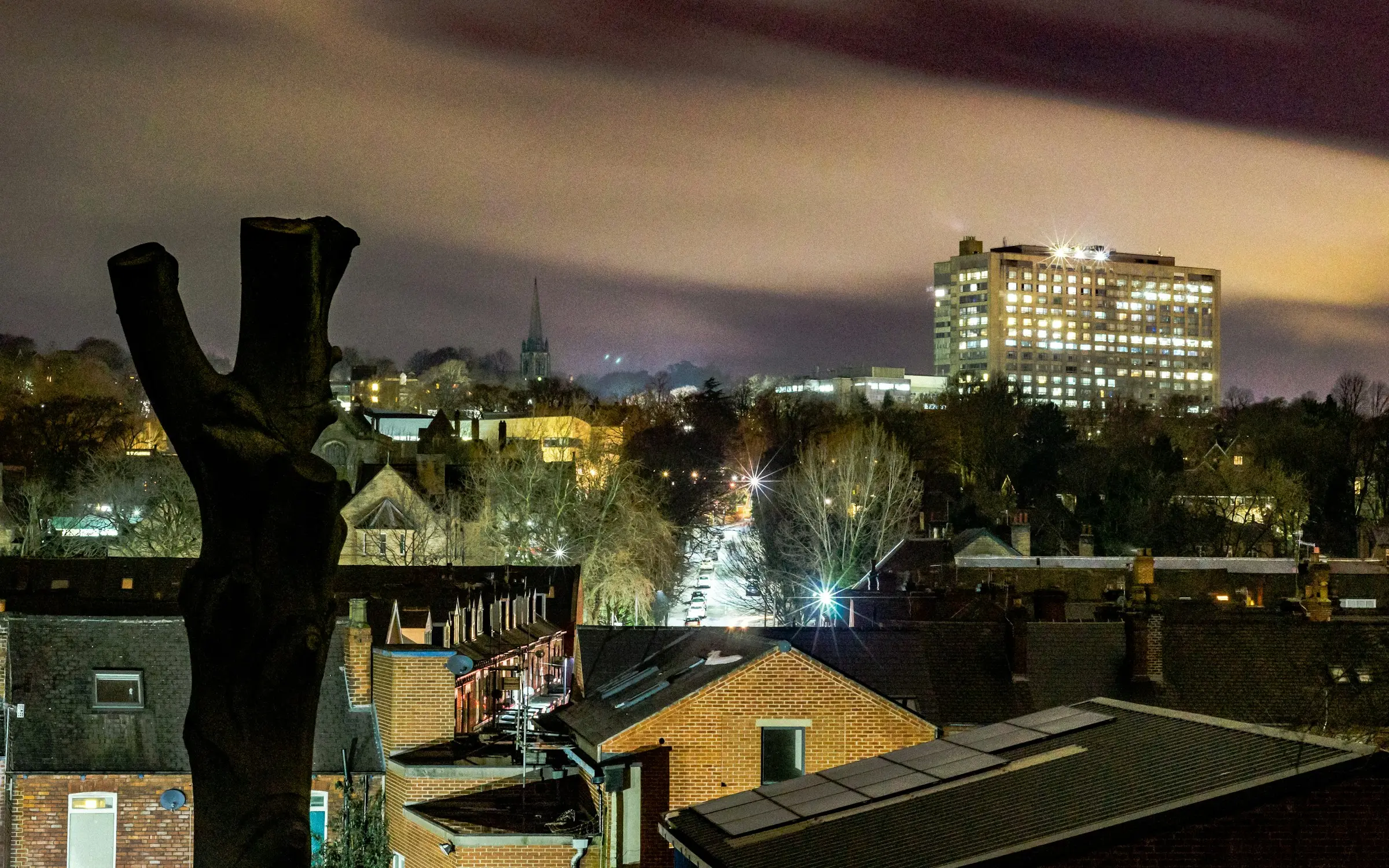
Cover photograph: A view from Sheffield General Cemetery towards the Royal Hallamshire Hospital. Photo: Shane Rounce on Unsplash.
A Sheffield Archives talk on Wednesday 11 November 2026 is set to explore The Leadswinger, a First World War trench magazine made by Sheffield men. Archivist Tim Knebel will discuss the people behind it and the stories the magazine preserves. The local history listing gives a 6pm start in the Carpenter Room at Central Library on Surrey Street. Confirm admission and booking with the library or Archives before travelling.
A magazine as a local history source
A trench magazine is a different kind of war record from an official roll of honour. It can show what contributors joked about, argued over or chose to put on a page for their own circle. That does not make it a complete account of wartime experience. It does make it a way to hear voices that a formal summary might flatten. An archivist can put those pages beside service, family and city records and ask who the writers actually were.
The title The Leadswinger is striking, but resist deciding what it means before hearing the talk. Language, humour and self-description all need their period context. The advertised subject is the Sheffield creators of the magazine between 1915 and 1919. That date range gives a clue that the story extends beyond the fighting itself, into the aftermath and the work of remembering.
What to listen for
If you go, notice how the speaker identifies a person behind a pseudonym or a printed line. Is it a name in the magazine, a photograph, a letter, a service record or a connection made from several sources? Local history becomes much more interesting when you can see the method. Ask what is certain, what is a strong interpretation and where the record falls silent.
It is also worth asking who is absent from the surviving pages. A group-produced magazine is a snapshot of its contributors, not a census of Sheffield people affected by the war. Families at home, workers in the city and people excluded from that social circle may have left other traces. The library and Archives are good places to begin following those threads.
Make the evening easy
Central Library is in the city centre, but the event is in the Carpenter Room rather than simply at the front desk. Allow time to find the room. If you need a step-free route, hearing support or another access arrangement, contact the venue ahead of time. The local listing gives the time and place, but it does not clearly state a ticket price; do not assume that the talk is free.
Wednesday 11 November is Armistice Day. The timing makes the subject especially apt, but the talk is about specific Sheffield voices and an archive source, not a replacement for a commemorative service. Pairing it with a visit to a memorial or a conversation at home can deepen what you take from it without forcing the evening into a grand statement.
The Hunter Archaeological Society's local events page lists the talk and its basic details. Check the current Sheffield Libraries information for access and any booking update. Our Sheffield history articles offer other routes into the city’s past. Bring a question, and let the records complicate the easy answer.
An archive talk can be a beginning rather than an answer. Note the names, dates and references that interest you, then look for the underlying sources if you want to go further. Sheffield’s Local Studies Library and City Archives have different opening arrangements and collections, so contact staff before travelling for a particular item. They can tell you whether a record is on site, digitised or needs ordering ahead.