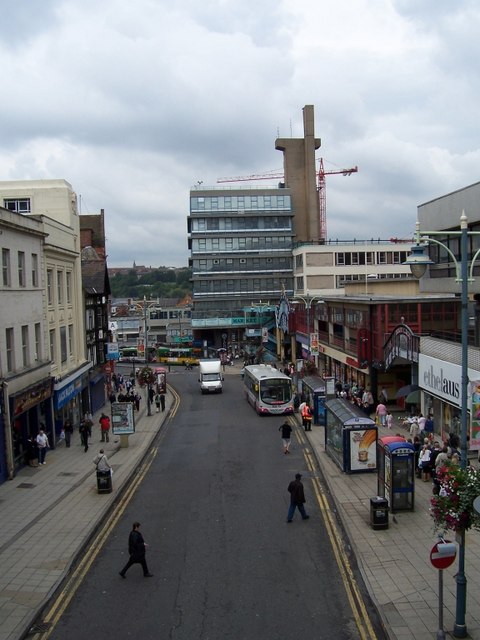
Cover photograph: Castle Market seen down Haymarket in 2007. Photo: Martin Speck / Geograph, CC BY-SA 2.0.
Castle Market is gone, but it is hard to tell Sheffield’s market story without it. The indoor building opened in 1959, replacing the old Norfolk Market Hall for many traders. It closed in 2013 when The Moor Market opened, and the Castle Market buildings were demolished in 2015. That short sequence of dates misses the interesting part: the smells, voices, regular customers and small routines that made a market a social place as well as somewhere to buy dinner.
The market before the building
The site is older than the concrete. Sheffield’s own market history traces trading in the area across centuries, with markets clustered around the old castle site. The council’s Castlegate history explains how streets, shops, slaughterhouses and market halls accumulated around it. Castle Market was one chapter in that longer relationship between the city and the place it bought food.
The 1959 building was a practical answer to a changing city. It brought traders indoors and added offices and shops. But a market does more than fit stalls into a floor plan. People remember where they could get a particular cut of meat, a book, a pair of shoes or a quick conversation. Those memories are not a complete record of every trader, but they explain why a building can be missed even by people who knew its rough edges.
A building with mixed feelings attached
Not everybody loved Castle Market. By its last years, parts looked worn and the route around Castlegate could feel difficult. Others valued its distinctive interior and the independence of the traders. It is possible to hold both views. A useful local history piece should not pretend the old market was flawless, or that a newer building erased the relationships made there.
The photographic record helps. Picture Sheffield's 1964 Castle Market photograph shows an early moment, while Geograph's 2007 Haymarket view shows the exterior closer to its final years. Compare them with your own memory, but keep the dates and photographers attached. Picture Sheffield’s archive images carry reuse restrictions, so link to them rather than copying them into a new post.
Where did the market go?
The Moor Market opened in November 2013. The council's tenth-anniversary account makes clear that some traders moved from Castle Market, while others started in the new building. That continuity matters. Saying the old market simply vanished would lose the people and businesses who kept trading. If you want to understand what survived, visit The Moor Market and talk to a stallholder who knows the longer story.
The former Castle Market site has also exposed older layers of Sheffield. The council’s Castlegate project account describes archaeological work on the castle gatehouse, moat and later industrial remains. The future of the site is a live civic question, not only nostalgia for a building that came down.
Walk both ends of the story
Start around Haymarket and Waingate to understand where Castle Market stood. Then go to The Moor Market and notice what a market needs now: easy access, regular trade and room for independent businesses to become familiar. Our Sheffield markets guide covers current choices. If you have a Castle Market memory, write down the stall, date and details you can place, rather than only saying it was better in the old days. Those specifics are what future Sheffielders will be able to use.
The market story also belongs to the people who did ordinary shopping there, not only the architects or city planners. A surviving receipt, a stallholder’s name or a photograph dated to a particular year can add more than a vague memory of the building’s atmosphere. Sheffield’s archives and market staff are better starting points for checking those details than a social post repeated without a source. Keep the voices, but keep the evidence beside them.